Every microbakery eventually settles into a rhythm — a combination of channels that fills their order book, fits their schedule, and keeps them from burning out. But almost none of them got there by starting everywhere at once. They picked one channel, worked it hard, and built from there.
This is the most important strategic decision you'll make in your first 90 days. Not your product lineup. Not your logo. Not your pricing spreadsheet. Where you sell determines who finds you, how you communicate with customers, what your production schedule looks like, and how fast you grow. Get it wrong and you can always pivot. But starting with clarity — one channel, total focus — gives you data you can actually use.
Why One Channel — Not Three
New microbakers love the idea of doing everything simultaneously: a booth at the Saturday farmers market, a weekly pre-order window, an Instagram shop, and a CSA bread box launching in the spring. This sounds like hustle. It's actually fragmentation.
Each sales channel requires its own rhythm. A farmers market demands Saturday mornings, booth setup and breakdown, cash handling, in-person customer conversation, and inventory management under live conditions. A pre-order system requires a functioning order intake flow, a cutoff schedule, batch planning, and a reliable pickup or delivery window. Social-media-first selling requires consistent content creation, DM management, and conversion work. These are genuinely different skill sets, and doing them all at once means doing none of them well.
There's also the operational reality: your kitchen has limits. Every unit of capacity you spend on one channel's demands is capacity taken from another. Trying to fill a market booth, manage a pre-order list, and handle DM orders in the same week is a reliable path to mistakes, exhaustion, and inconsistent product quality — the one thing you can't afford to compromise.
The best microbakers treat their first channel like a controlled experiment. Limit the variables. Learn what works. Then scale what works and drop what doesn't.
Option A: The Farmers Market
The farmers market is the most visible, social, and immediately rewarding channel available to a new microbaker. There is nothing quite like the feeling of selling out your first booth. It's also the most demanding channel to start with — and that's worth knowing going in.
The Advantages
Instant foot traffic. A well-attended farmers market already has your customers in it. You don't have to build an audience from scratch — you set up in front of one. People come to farmers markets specifically to buy local, artisan food. You are exactly what they're looking for.
Cash and card sales on the spot. Revenue is immediate. No chasing invoices, no waiting for order windows to close, no minimum thresholds. You bake it, you sell it, you go home with money.
Real-time product feedback. Watch what people pick up first. Listen to what they ask about. Notice what makes them reach for their wallet and what makes them pause. This is market research you can't buy.
Community and word of mouth. Farmers market regulars are loyal and communicative. One great experience at your booth generates referrals, social media posts, and return customers in a way that no ad campaign can replicate.
The Realities
Booth fees. Most markets charge vendors a weekly fee, typically ranging from $25 to $150 depending on the size and location of the market. Annual membership fees are common. These costs are real and must be factored into your unit pricing.
Early mornings and physical labor. Markets start early. Loading your car at 5am, setting up a tent, managing inventory in the heat or cold, standing for four to six hours, and tearing down after — this is physical work on top of your overnight baking. Do not underestimate it.
Weather dependency. A rainy Saturday can halve your sales. You'll have leftover product you either give away, sell at a discount, or absorb as a loss. Build this into your planning and your prices.
Inconsistent revenue. Holiday weekends are great. The week after, when half the regulars are traveling, may not be. Early months will vary. Track your average, not your best day.
How to Apply and What to Expect
Start by researching the farmers markets in your area — most have vendor applications on their websites. Confirm that they accept cottage food vendors; most do, but some require a food handler's permit, proof of insurance, or a licensed kitchen. Application windows often open months in advance, so apply as soon as you're ready, even before your first batch.
When you get accepted, request a spot near the entrance or a high-traffic anchor vendor if possible. Bring a folding table, a canopy tent with weights, and a display that lifts your product off the table surface. Printed signage with your bakery name and prices — readable from ten feet away — is non-negotiable. Bring a Square reader or Venmo QR code. Carry small bills for change. Bring a little less than you think you'll sell on your first day; selling out at 10:30am is good for business and good for your morale.
Pricing for the Market
Farmers market prices should reflect your ingredient costs, your time, your booth fee amortized across your units, and a margin. A common mistake is pricing below what your product deserves because you're nervous about how market customers will respond. Farmers market shoppers are not there to find the cheapest bread in town. They're there to find the best bread in town. Price accordingly.
A useful rule: if you're selling out of everything every week, your price is too low. If you're consistently bringing home 30% of your inventory, your price may be too high — or your display, location, or product mix needs adjustment.
Option B: Pre-Order / Pickup
The pre-order model is the most operationally efficient sales channel available to a home baker. You bake exactly what has been sold. No booth fees. No weather variables. No mystery about whether Saturday will be good or bad. This is how most full-time microbakers eventually operate — and it's a perfectly valid first channel, especially if you value predictability.
The Advantages
Zero waste. You only bake what's been ordered. This is transformative for your ingredient costs, your time, and your mental load. No calculating how much to bring, no end-of-day decisions about leftover product, no losses absorbed.
Predictable schedule. You know exactly how much you're baking before you start. Production planning becomes simple. You can manage your starter schedule, your flour order, and your oven blocks around a fixed number instead of a guess.
Loyal, repeat customers. Pre-order customers make an intentional choice to buy from you. They carve out time to pick up. They're invested. Retention rates for pre-order microbakeries are consistently higher than market-based ones, because the relationship is more personal from the start.
No booth fee overhead. The money stays in your margin.
Setting It Up
The simplest version of a pre-order system costs nothing to build. A Google Form with your product list, size options, pickup time selections, and a "how did you hear about us" field gives you everything you need to take orders and plan production. Link it from your Instagram bio. Post when the order window opens — typically one week in advance — and post when it closes.
For payment, you have options: collect at pickup (cash or Square/Venmo), send a PayPal or Stripe invoice after the order window closes, or use a simple free Square Online page that handles payment at order time. The last option is the most professional and removes the awkwardness of collecting payment at the door.
Order cutoff strategy. Set your cutoff 48 to 72 hours before pickup. This gives you time to plan your production, order any additional supplies if needed, and bake without rushing. Post your cutoff time prominently. "Order window closes Tuesday at noon for Friday pickup" is clear, memorable, and trains customers to act on schedule.
Pickup logistics. Be specific about your pickup window — "Friday 4–6pm" rather than "Friday afternoon." Give a clear address and instructions: where to park, where to come to the door, what to expect. A short confirmation email or DM after the order window closes with these details builds confidence and reduces no-shows.
Option C: Social Media First
Instagram and TikTok are legitimate, powerful sales channels for microbakers — not just marketing tools for other channels. Bakers who lean into content creation first often build faster, more engaged customer bases than those who wait for a market booth or a website to be the entry point.
What Content Performs
Bread is extraordinarily photogenic and video-friendly. The content that consistently performs well for microbakeries falls into a few reliable categories:
Oven spring and scoring reveals. The moment a scored loaf hits a hot oven and blooms open is one of the most satisfying things in food video. It's short, visually dramatic, and requires nothing more than your phone positioned over your oven window. These consistently rack up views and saves.
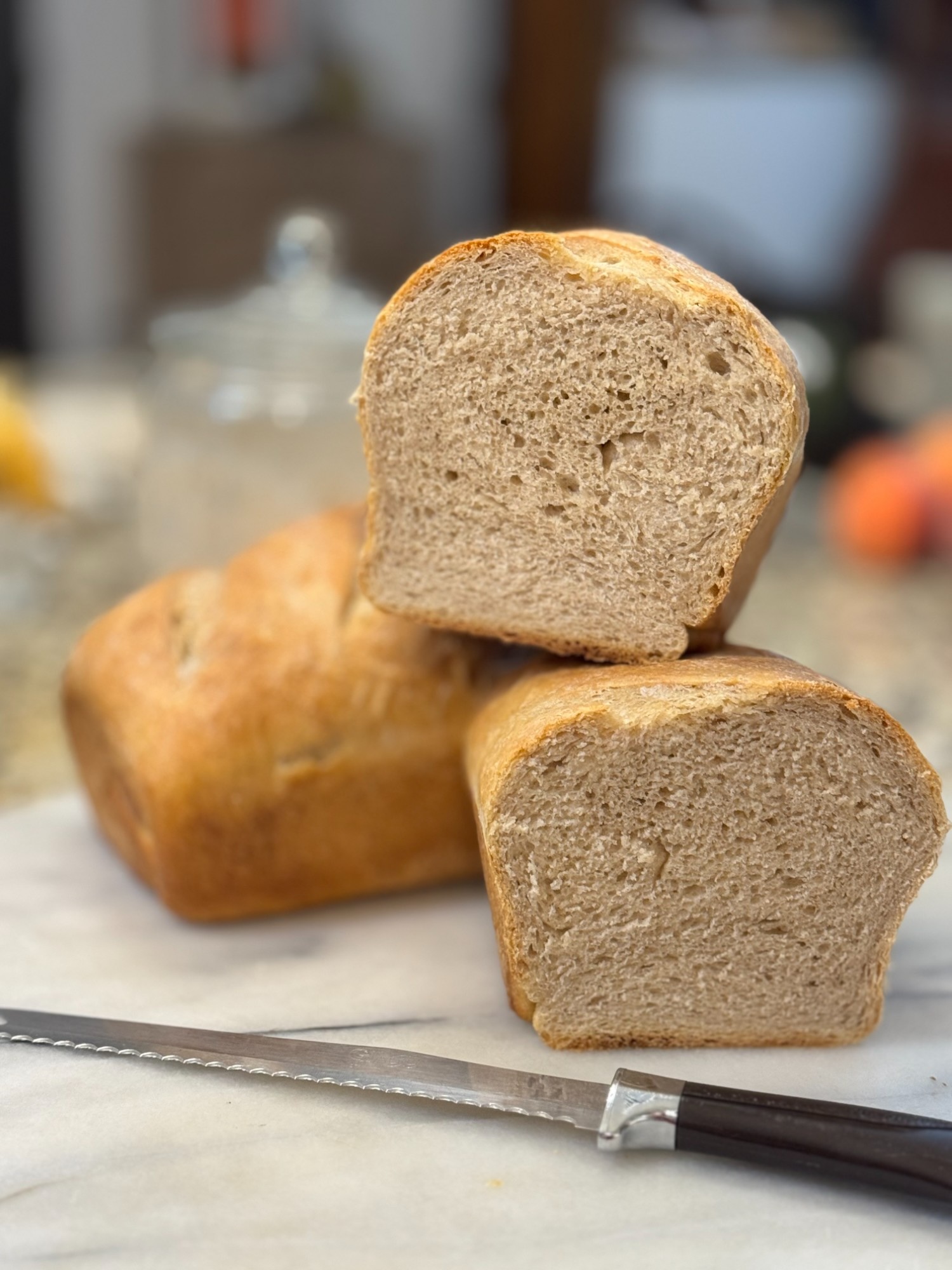
Crumb reveals. The moment you slice into a finished loaf. The open crumb, the steam, the sound — this is the bread equivalent of a satisfying video. Post it every time you have a loaf worth showing.
Process content. Shaping videos, lamination close-ups, the fold of an enriched dough — bread-making has a tactile quality that translates beautifully to short video. You don't need a professional camera or a ring light. Natural window light and a clean background are enough.
Behind-the-scenes content. Your kitchen at 4am. Your starter in its jar. The flour on your arms. Real, unglamorous, honest content from the actual process of running a small food business resonates deeply with the audience that will become your customers.
The DM-to-Order Flow
Your Instagram bio should say, clearly and simply, what you make, where you're located, and how to order. "Sourdough bread + bagels — Nashville, TN — DM to order" is enough. When someone DMs you, have a short, friendly script ready: your current offerings, your pickup schedule, your prices, and your order window. Don't overcomplicate it. Answer fast. Move them from DM to confirmed order in one or two exchanges.
Over time you can migrate from pure DM orders to a Google Form or order page — but DM ordering is a perfectly functional system for the first three to six months, and it builds a personal connection that transactional online checkout doesn't replicate.
Geotagging Strategy
Tag your city or neighborhood in every post. Use local hashtags (#NashvilleBread, #AustinSourdough, #PortlandBaker) alongside broader ones (#sourdough, #microbakery, #cottagefoods). The goal of your early Instagram is not to go viral nationally — it's to become the obvious choice for bread in your local area. Every geotag is a signal to the algorithm and to potential customers that you are here, you are local, and you are available.
Converting Followers to Customers
The gap between "follower" and "customer" is smaller than most new microbakers think. Someone who follows your account, watches your stories, and saves your posts is warm. They already want what you're making. Your job is to make it easy for them to buy. Post your order window opening with a clear call to action. Use Instagram Stories to count down to your cutoff. Show your sold-out posts so followers know to act fast next time. The conversion mechanism is mostly just friction removal — make it obvious, make it easy, and make it now.
Option D: CSA / Bread Subscription Boxes
The bread subscription model — monthly or biweekly boxes delivered to subscribers — is worth knowing about even if it isn't your first channel. A CSA-style bread box generates predictable, recurring revenue, often paid upfront for a season. This smooths cash flow dramatically and makes production planning almost trivially easy.
The operational challenge is fulfillment: delivering the same or similar boxes to many customers on the same day. This is manageable at small scale (20–30 subscribers) but becomes a genuine logistics problem beyond that. It also requires a higher level of customer commitment — monthly subscriptions are a harder sell than a single-order transaction.
Most microbakers who run successful subscription programs started with another channel first, built a core loyal customer base, and then converted some of those customers to subscribers. Consider it a phase-two channel — something to grow into once you have your production system and your customer relationships established.
How to Evaluate After 60 Days
By the end of your second full month of selling, you have enough data to make informed decisions. Pull out whatever simple tracking you've been doing — even a basic note in your phone counts — and look at the numbers honestly.
Revenue per bake day. What's your average gross on a production day, after booth fees or platform fees? Is that number growing, flat, or declining?
Repeat customer rate. How many of your customers came back for a second order? Repeat customers are the engine of a sustainable microbakery. If you have almost none, something in the experience — product, price, availability, or convenience — needs adjustment.
Your experience of it. Are you energized after a market day or depleted? Is the pre-order rhythm sustainable with your life, or is the Sunday bake grinding into Monday? The best sales channel is one you can keep doing. Your own sustainability is a metric.
Reach and discoverability. Are new customers finding you, or are you selling exclusively to people you already know personally? A channel that isn't producing new customer acquisition after 60 days either needs a strategy adjustment or isn't the right channel for you.
When to Add a Second Channel
You're ready to add a second channel when your first one is running reliably on its own — when the operational demands of managing it have become routine rather than stressful, when you consistently fill your capacity, and when you have a clear picture of what more volume would require from your kitchen and your schedule.
The most common and complementary combinations: farmers market plus pre-order pickup (market for new customer acquisition, pre-order for retention and volume), or social media plus pre-order (Instagram as the top of the funnel, pre-order as the conversion mechanism). These combinations work because they serve different moments in the customer relationship without creating operational conflicts.
What doesn't work: adding a second channel because you're impatient with your first one before you've given it a real chance. Sixty days of genuine effort on a single channel is the minimum. Ninety is better. The data you collect in that window is worth more than any strategy you could plan on paper.
"The microbakers who scale fastest aren't the ones who launch on every channel simultaneously. They're the ones who get very, very good at one thing before they add another."
The Bottom Line
There's no universally correct first channel. The farmers market is right for bakers who are social, energized by in-person selling, and living somewhere with strong market culture. Pre-order pickup is right for bakers who value control, predictability, and zero waste. Social-media-first is right for bakers who are comfortable on camera, enjoy content creation, and have the patience to build an audience before revenue follows.
What you're actually choosing is not just where you sell — it's what your week looks like, who your customers are, and what kind of microbakery business you're building. Pick the one that fits your actual life, commit to it fully for 60 days, and then decide what's next based on what you learned.